The rains started in San Francisco yesterday, signalling a rapid turn towards winter. After the rains begin, California’s sun-burnt hills turn green and in my back yard the bougainvillea branches take off with extra color in all directions.
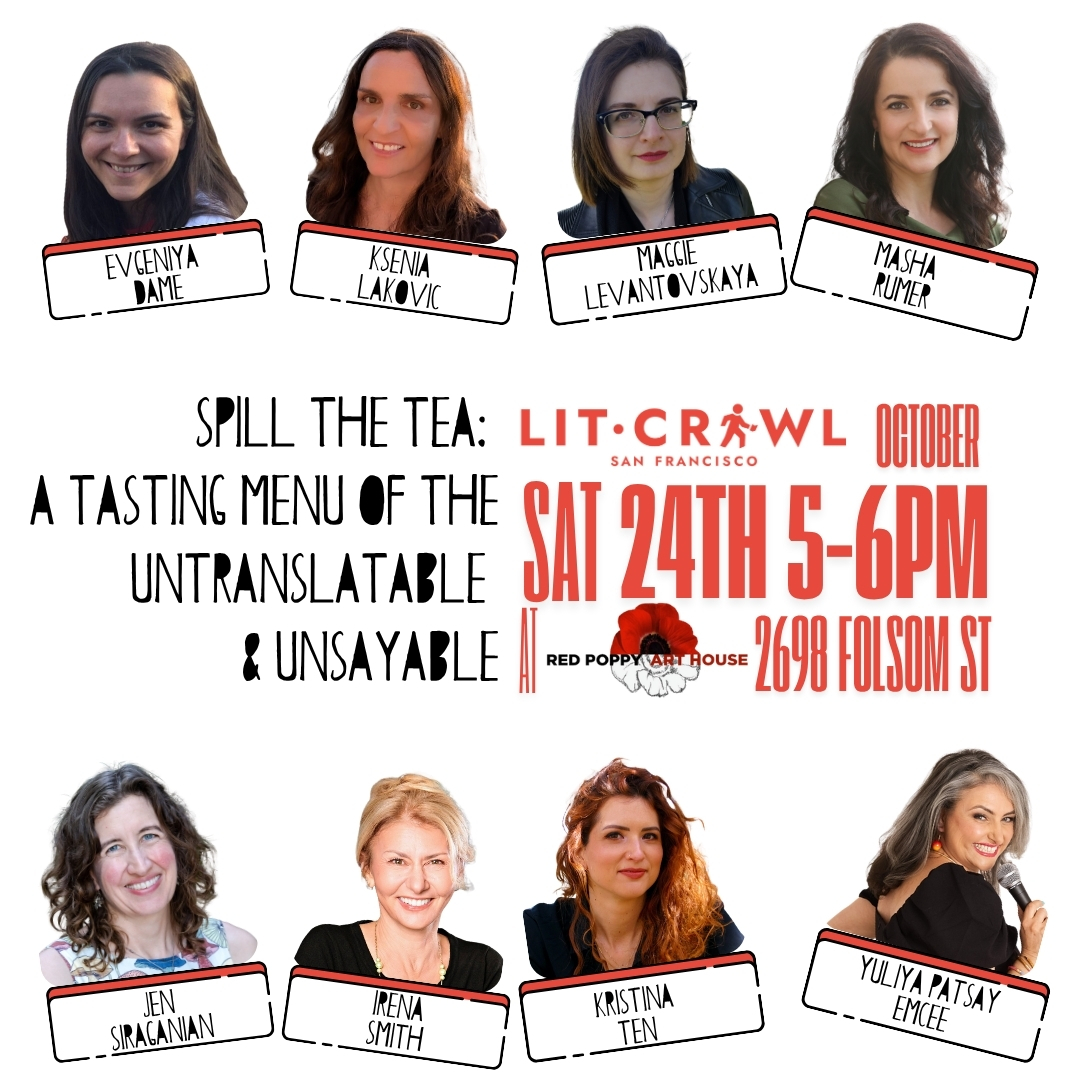
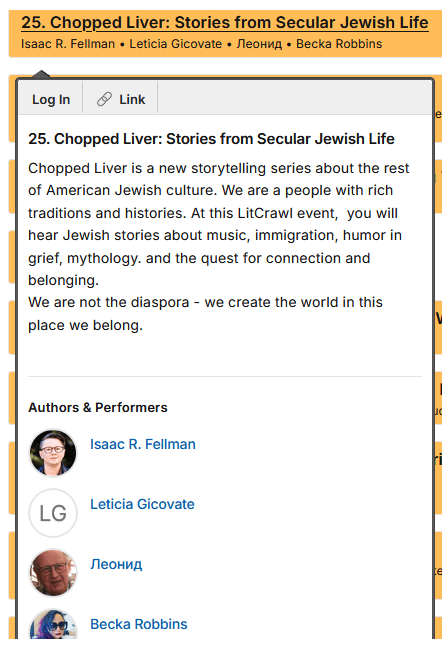
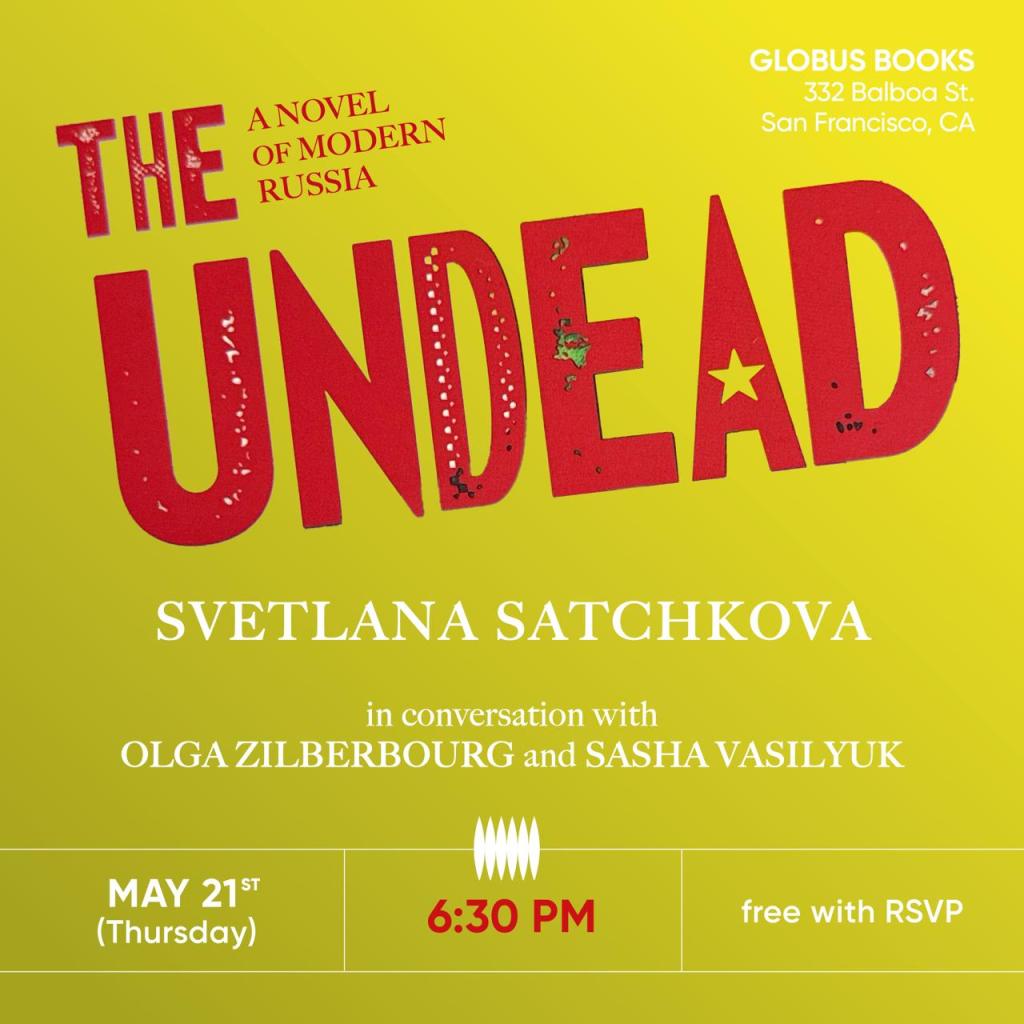
Our literary world is blooming too. Tonight, I’m going to a conversation between Sasha Vasilyuk and an Estonian writer Carolina Pihelgas. Tomorrow, I look forward to seeing some of you at Spill the Tea and Chopped Liver Lit Crawl events, subject of my previous email. Meantime, more events are imminent.
Have I mentioned that I’ve been working on a novel? It’s a queer love story between two immigrant characters that begins in an ESL class in London in 1996 and takes thirty years to develop. I’ll be reading an excerpt from this work on Saturday, November 7 at the Sycamore, as a part of The Last Supper Party reading series curated by Kimi Sugioka and the San Francisco International Arts Festival.
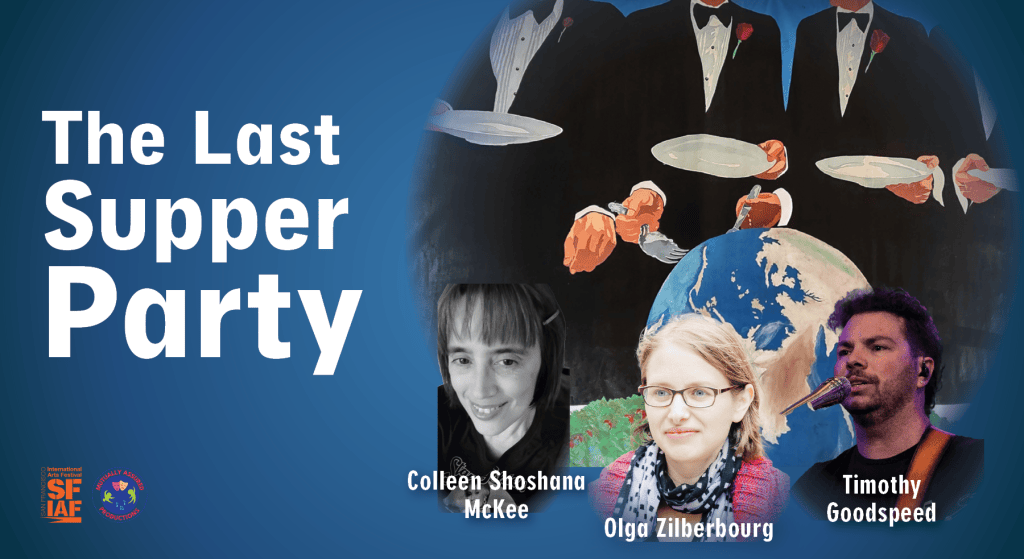
I’ll be reading alongside with Colleen Shoshana McKee, a poet whose latest collection Feeding Ghosts is a tender and personal reflection on a relationship with a fellow Bay Area poet. Colleen is a friend whose work and its new directions has always surprised me, and I can’t wait to see what she brings to the reading in November.
This reading is an *Open Mic*, so bring your own work to read, and support The Sycamore, which is the best literary bar in the Mission. Songwriter Timothy Goodspeed will play and sing! Please RSVP here.
The following week, on Thursday, November 12, join me in celebrating the publication of three delightful new books at Green Apple in the Park. Scott Lambridis and I have been book club buddies for over fifteen years now, and though our readerly tastes are quite different, it’s a huge pleasure to see how some of the older books on our reading list have impacted the world of his debut novel, St. Ulphia’s Dead. Set in a remote village, his book deals with the locals’ beliefs that they are haunted by a cannibalistic spirit, the Wendigo, and medical researchers who arrive to investigate the issue. In our world both grounded in the scientific method and at the same time ruled by irrational behavior, fiction can show how these seemingly opposing impulses feed each other.
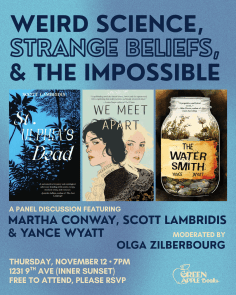
Yance Wyatt book The Water Smith has been billed as a Southern Gothic, and Martha Conway’s We Meet Apart is a WWII-era story about two sisters who become separated and stranded in parallel universes. I’m still reading these two, but I think we’ll have plenty of weird science to talk about.
Green Apple in the Park, November 12, 7 pm. Don’t forget to register and please buy the books!
And if you happen to be in Southern California this weekend, don’t miss Santa Monica Review’s issue release party this Sunday with Dylan Landis, Monona Wali, and many amazing others! Thanks to the editor Andrew Tonkovich who appreciates my sense of humor, I have a story in this issue. More on this once in a following newsletter (once I receive the copy of the magazine.)